Why Proper RSO Storage Matters
The potency and effectiveness of your RSO depends significantly on how you store it. Cannabinoids like THC and CBD are delicate compounds that degrade when exposed to heat, light, oxygen, and moisture. Proper storage preserves the full-spectrum benefits and ensures your RSO remains effective for longer periods.
Ideal Storage Conditions for RSO
Temperature Control
Best temperature range: 60-70°F (15-21°C)
Heat is the primary enemy of cannabinoid preservation. High temperatures accelerate degradation of THC, CBD, and terpenes. Room temperature storage is acceptable for short-term use (2-4 weeks), but cooler conditions significantly extend shelf life.
Storage options by temperature:
- Room temperature: 2-4 weeks potency retention
- Refrigerator (35-45°F): 3-6 months potency retention
- Freezer (-4°F or below): 1-2 years potency retention
Light Protection
UV light exposure: Causes rapid cannabinoid breakdown
Store RSO in:
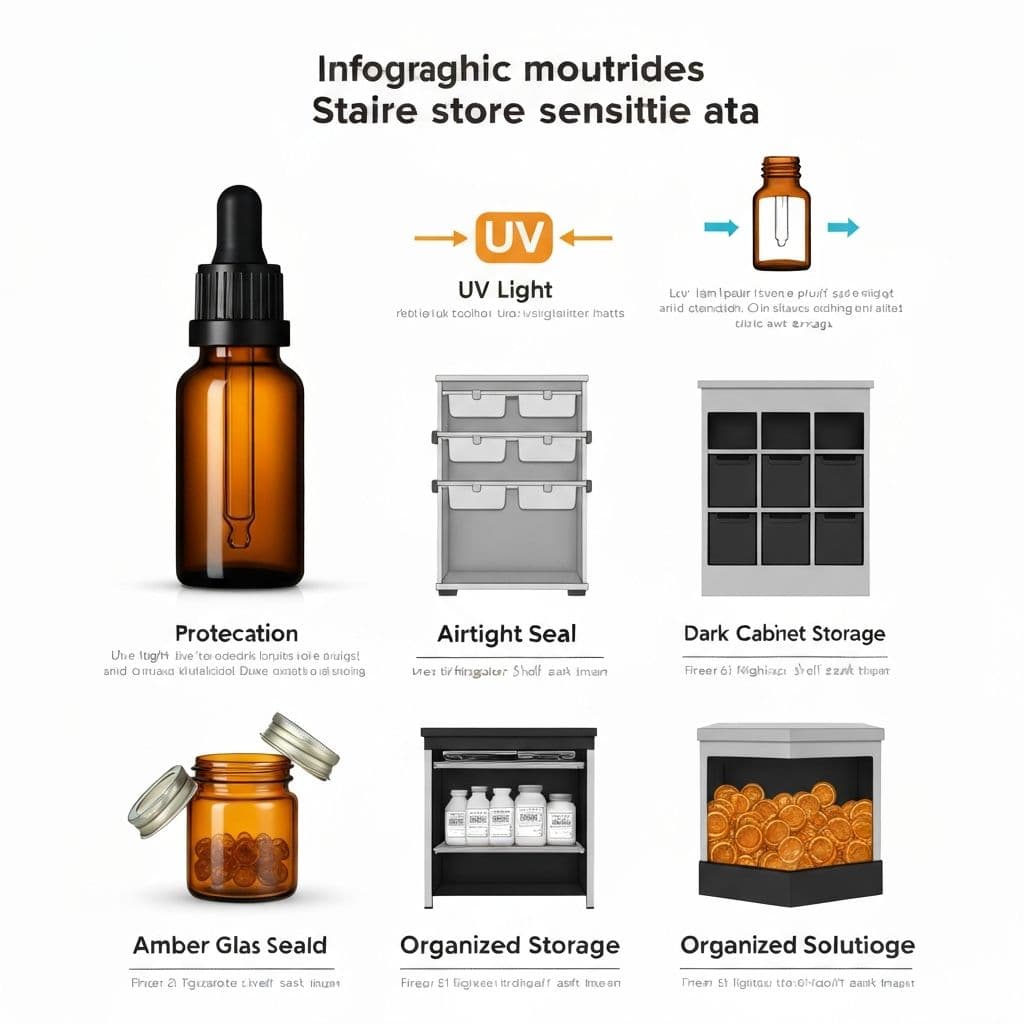
- Dark amber or opaque glass bottles (blocks light effectively)
- Closed cabinets or drawers (away from direct sunlight)
- Tinted containers (protects from fluorescent lighting)
Never store in:
- Clear glass containers (allows light penetration)
- Bright kitchen countertops (constant light exposure)
- Windows or areas with direct sunlight
Oxygen & Moisture Control
RSO naturally resists moisture due to its oil composition, but exposure to air accelerates oxidation.
Best practices:
- Keep syringe caps tightly sealed
- Store in airtight containers when transferred
- Avoid opening containers frequently
- Use properly sealed applicators with caps
- Store away from humid bathrooms or kitchens
Container Selection
Best RSO Storage Containers
-
Original syringe with cap (recommended)
- Sealed application tube
- Minimal air exposure
- Easy to measure doses
- Comes with protective cap
-
Amber glass jars (for bulk storage)
- Blocks light effectively
- Easy to access
- Available in various sizes
- Pair with tight-fitting lid
-
Glass syringes (for portion storage)
- Can divide large quantities
- Light-blocking dark glass
- Individual sealed portions
- Easy to label dates
Containers to Avoid
- Clear glass - allows light penetration
- Plastic containers - can leach chemicals, interact with cannabinoids
- Metal containers - reactive with oil components
- Ceramic without glaze - porous, allows moisture
Month-by-Month Potency Loss
Without proper storage, RSO loses potency over time:
| Storage Condition | 1 Month | 3 Months | 6 Months | 1 Year | |------------------|---------|----------|----------|---------| | Room temp, light | 20% loss | 50% loss | 75% loss | 90% loss | | Room temp, dark | 5% loss | 15% loss | 30% loss | 50% loss | | Refrigerated | 2% loss | 5% loss | 12% loss | 25% loss | | Frozen | <1% loss | 2% loss | 5% loss | 10% loss |
Step-by-Step Storage Guide
Short-term Storage (2-4 weeks)
- Keep RSO in original sealed syringe
- Store in cool, dark place (closet, cabinet)
- Cap always secured when not in use
- Keep away from heat sources
- Temperature: 60-70°F ideal
Medium-term Storage (1-3 months)
- Transfer to dark amber glass jar if keeping original syringe sealed
- Place in refrigerator (back shelf, not door)
- Ensure lid is completely sealed
- Label with date and cannabinoid content
- Keep away from food items
Long-term Storage (6+ months)
- Use dark amber glass containers with airtight seals
- Store in freezer (ideal for 1-2 years)
- Wrap containers in dark cloth for extra protection
- Label clearly with date, strain, and potency
- Keep in consistent location (avoid moving frequently)
Signs Your RSO Has Degraded
Watch for these indicators that RSO may have lost potency:
- Color darkening - Additional browning indicates oxidation
- Texture changes - Unusually separated or crystallized
- Odor changes - Unpleasant or off-putting smell
- Visible mold or contamination - Discard immediately
- Leakage - Container seal compromised
- Inconsistent effects - Noticeably weaker than before
Common Storage Mistakes to Avoid
- Storing in direct sunlight - Rapidly degrades cannabinoids
- Keeping in hot kitchen cabinets - Heat accelerates breakdown
- Using clear containers - Light exposure causes degradation
- Frequent opening - Increases oxygen exposure
- Bathroom storage - Humidity damages potency
- Forgetting to date containers - Can't track freshness
- Freezing then thawing repeatedly - Damages cannabinoid structure
- Storing with strong-smelling foods - Terpenes absorb odors
Travel Storage Tips
Short trips (1-2 days)
- Keep in original sealed syringe
- Store in insulated bag or cooler
- Pack in dark compartment or bag
- Keep away from heat sources
Longer trips (3+ days)
- Use opaque container with seal
- Pack with ice packs if possible
- Keep in cooler with dark covering
- Never leave in hot car
Storage Equipment Checklist
- [ ] Dark amber glass bottles or jars
- [ ] Airtight container lids
- [ ] Labels and markers
- [ ] Refrigerator space available
- [ ] Dark storage location or cabinet
- [ ] Thermometer to monitor temperature
- [ ] Silica packets (for extra moisture control)
- [ ] Insulated bag for travel
FAQ: RSO Storage
Q: Can I store RSO at room temperature? A: Yes, for short-term use (2-4 weeks), room temperature in a dark location is acceptable. For longer storage, refrigeration or freezing is recommended.
Q: How long does RSO last frozen? A: Properly frozen RSO (0°F or below) maintains potency for 1-2 years, with minimal degradation.
Q: Can I freeze and thaw RSO multiple times? A: Minimize freeze-thaw cycles as repeated temperature changes can damage cannabinoid structures. Portion your RSO before freezing to avoid multiple thawing.
Q: Will RSO go bad? A: RSO doesn't "go bad" like food, but cannabinoids degrade over time. Degraded RSO may be less effective but isn't dangerous.
Q: Can I use the refrigerator if others see it? A: Yes, store in labeled containers on back shelf. Many people store supplements and medications in refrigerators.
Q: What's the best container to buy RSO in? A: Original sealed syringe with cap is ideal. Dark amber glass containers are best for longer-term storage.
Conclusion
Proper RSO storage is essential for maintaining potency and ensuring consistent results. By following these storage guidelines, you can:
- Extend shelf-life from weeks to years
- Preserve cannabinoids and terpene profiles
- Maintain effectiveness for reliable results
- Protect investment in premium products
- Ensure safety through proper sealing
Whether you're storing for short-term daily use or long-term emergency supply, the fundamentals remain the same: keep it cool, dark, sealed, and dry. With proper storage practices, your RSO will remain effective and ready whenever you need it.
This content is for informational purposes. Storage recommendations are for legal jurisdictions only. Always follow local laws regarding cannabis product storage.